

While Paris Saint-Germain is now a contender for the Champions League title, the French capital was notably late in developing a club befitting its significant role in football history.
As Bayern Munich prepares to face PSG in the Champions League semi-finals, it’s a reminder that Paris, the home of the nouveau riche PSG, is also, in many ways, the birthplace of modern football. Key football organizations, major competitions, and prestigious individual awards—virtually all the structures that define contemporary football—originated in Paris.
Looking back to 1900, as the novel team sport spread from Great Britain to continental Europe, Paris hosted the second modern Olympic Games, with football featured for the first time.
To further promote its popularity and professionalize its organization, Frenchman Robert Guérin and Dutchman Carl Anton Wilhelm founded an international football federation four years later: FIFA. This historic event took place at Rue Saint-Honoré 229, near the Champs-Élysées. England, as the motherland of football, was the logical home for a world governing body but saw itself as superior to the rest of the planet and showed little interest in international competitions.
From Paris, FIFA began organizing Olympic football tournaments and, starting in 1930, the World Cup. The idea for a dedicated World Cup came from the then-current FIFA President, Jules Rimet, who was also the president of the French Football Federation in Paris. In his honor, the original World Cup trophy bore his name. Brazil was allowed to keep it after their third victory in 1970. The first World Cup was held in Uruguay in 1930, the third in France in 1938, before World War II abruptly interrupted football activities.
How a French Journalist Invented the European Cup in 1955
The war did not change one thing: groundbreaking decisions for the future of football continued to be made in Paris. In 1954, the European football federation UEFA was founded and established its first office in the French capital. A few streets away, within the editorial offices of the renowned sports newspaper L’Équipe, discussions were underway about introducing a European Cup for club teams.
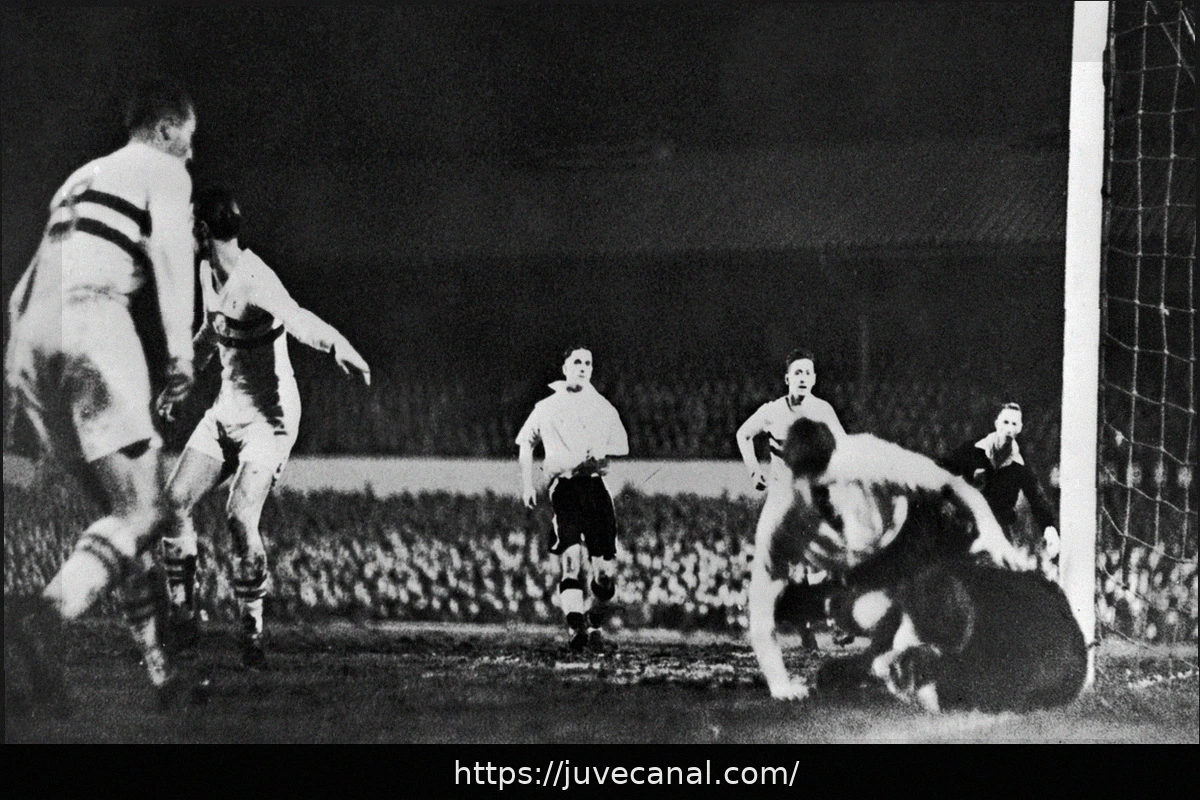
The catalyst was a friendly match between Wolverhampton Wanderers and Honvéd Budapest in December 1954. After Wolves’ narrow 3-2 victory over the Hungarian «wonder team,» the English Daily Mail sensationally headlined: ‘Hail, Wolves ‘Champions of the world’ now!’ Outside of England, the victory generated less enthusiasm. L’Équipe reporter Gabriel Hanot was also less than impressed, but the audacious headline sparked an idea in him for a Europe-wide competition. All national champions were to participate and compete in a knockout system with home and away matches, culminating in a grand final on neutral ground.
With the support of his employer, Hanot immediately set about implementation. He contacted the continent’s major clubs and invited them to a meeting in Paris in April 1955. Representatives from 15 clubs, including Real Madrid and AC Milan, responded to the call and were enthusiastic about Hanot’s idea. The young UEFA, located nearby, was initially skeptical but ultimately agreed to organize the tournament.
Just nine months after the friendly between Wolverhampton and Honvéd, in September, the first match of the European Cup of National Champion Clubs, today’s Champions League, kicked off. Real Madrid won the first title, and the final was held – where else? – at the Parc des Princes in Paris.
The First European Championship Was Held in France in 1960
Hanot’s ingenuity did not end with the European Cup idea. In 1956, he and his colleague Jacques Ferran invented the Ballon d’Or for Europe’s Footballer of the Year. Since then, the golden ball has been awarded annually by France Football—another employer of Hanot, alongside L’Équipe—and quickly established itself as the most prestigious individual award in world football.
Meanwhile, UEFA pushed forward with its plans for a European Championship for national teams. The driving force was General Secretary Henri Delaunay, also a native Parisian. Although Delaunay had already passed away by the time of the inaugural Euro in 1960—fittingly held in France—he was, in a sense, present as the trophy was named in his honor. This marked the end of Paris’s footballing epoch. UEFA, like FIFA before it, relocated to Switzerland, where both federations remain based to this day.
Paris Saint-Germain Only Emerged After Qatar’s Investment in 2011
While all these visionaries in Paris were shaping modern football, they overlooked one crucial element: they failed to build a formidable team in their own city. Racing Club (now in the fifth tier) won a league title in 1936, and like Red Star (now in the second tier), they won the cup a few times. International success? None. It is the great paradox of modern football’s birthplace that it lacked a sporting flagship for so long.
Paris Saint-Germain was only formed in 1970 through a merger. After various birth pangs and an initial league title in 1986, PSG, financed by the television channel Canal+, established itself firmly among the national elite in the 1990s. A temporary dip was followed by a decisive turning point in 2011: Qatar’s sovereign wealth fund invested, and since then, with immense transfer spending, they have transformed PSG into one of the world’s best clubs. In 2025, they achieved their first Champions League triumph, the very competition that—like so much else in football history—originated in Paris.