

The Denver Nuggets and their star player, Nikola Jokic, find themselves in a precarious 1-3 deficit against the Minnesota Timberwolves in the NBA Playoffs. While Jokic’s raw statistics might appear strong, a closer look reveals significant struggles that, combined with other team issues, have put the Nuggets in a desperate situation. Despite the grim outlook, a glimmer of hope persists.
On the surface, Jokic’s stat line reads impressively: 25, 24, 27, and 24 points, consistently accompanied by at least 13 rebounds and a triple-double in one game, with close calls in assists. However, these numbers fail to tell the full story of Denver’s dire playoff predicament, where they must win out to avoid an early exit. The blame, at least in part, falls squarely on the shoulders of their MVP candidate.
A deeper analysis of Jokic’s performance quickly turns the impressive statistics into concerning ones. His field goal percentage stands at a disappointing 51.9% for his standards, and his once-reliable three-point touch has seemingly vanished, with only 5 makes out of 27 attempts. His early efficiency in Game 1 (11/19 FG, 2/7 3FG) is the only reason his overall shooting percentages aren’t even more dire. Many of his shots appear to be short, hinting at potential fatigue. While he started the season hot from deep, his three-point shooting has faltered significantly since a four-week injury layoff around the new year, raising questions about long-term shooting issues.
These shooting problems might not be solely due to the knee injury that nearly cost him an MVP candidacy. According to NBA insider Tim MacMahon on the ESPN «Hoop Collective» podcast, the more significant concern for the Nuggets is not Jokic’s knee but his wrist. MacMahon noted at least one instance where Jokic received a pain-relieving injection for his right wrist, an issue that predates the current season. Even Head Coach Michael Malone acknowledged earlier in the season that Jokic’s wrist was causing him problems, though the player himself wouldn’t admit it.
Grauenhafte Zahlen: Gobert wird zum Jokic-Albtraum
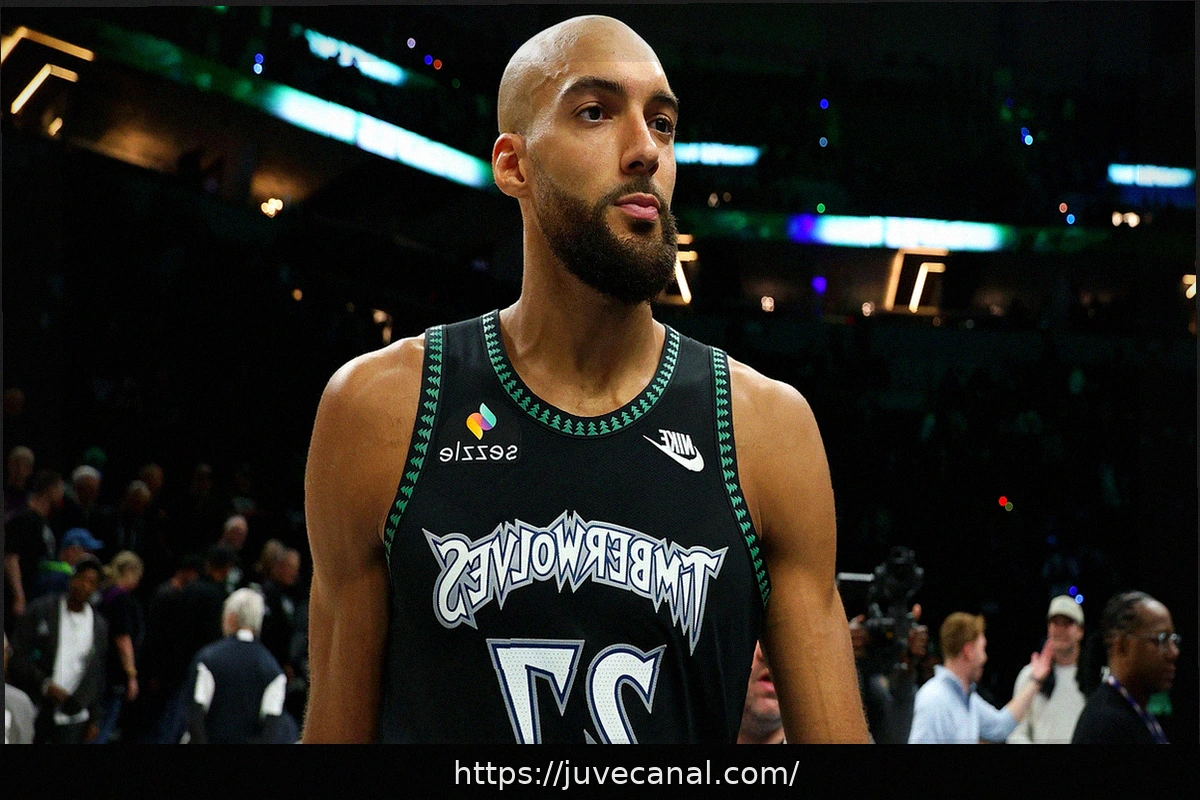
Beyond the lingering wrist issue, Rudy Gobert has emerged as a significant problem for Jokic. The French center, who has been victimized by Jokic for 61 and 56 points in recent matchups, appears to have found a key to stopping the Serbian superstar. According to NBA statistics, Jokic has taken 41 shots with Gobert as his primary defender in one-on-one situations, making only 12 of them for a dismal 29% success rate. Gobert’s defensive pressure makes it incredibly difficult for the Nuggets to get Jokic the ball in his preferred spots. His clever and aggressive defense, combined with seemingly boundless stamina, has turned him into a personal nightmare for Jokic, playing nearly 48 minutes per game.
Gobert wird angestachelt und macht ganz Denver Probleme
Despite the evident struggles, Shaquille O’Neal stated that while players miss shots, he wouldn’t claim Gobert «shut down» Jokic, a sentiment likely to further fuel Gobert’s fire. The four-time Defensive Player of the Year took his exclusion from the top three defenders this season personally. After holding Jokic to 1-of-8 shooting in Game 2, he sarcastically remarked about his «luck,» adding that he’d faced disrespect before and would likely face it again. He issued a warning: «If you want to disregard size, take it for granted, they will soon feel the consequences.»
The consequences have been evident, not just for Jokic but for the entire Nuggets team. Gobert’s ability to contain Jokic without needing constant double teams has stifled the Nuggets’ usual cutting game, denying them easy looks near the basket and open three-pointers. This defensive dominance by Gobert effectively neutralizes not only Jokic but also the Nuggets’ supporting cast. While Jamal Murray has managed 30-point efforts in three games, he’s taken an excessive 89 shots, shooting just 33 from the field. His three-point percentage (9-of-34) is nearly as poor as Jokic’s, and he’s gone scoreless from deep twice. Tim Hardaway Jr. and Cam Johnson have also struggled significantly, with Johnson scoring only 15 points over the last two games combined. The Nuggets, who boasted the league’s best offensive rating (121.2) in the regular season, have seen that number plummet to 105.2 in the playoffs, a mark worse than all but a few offensively challenged teams.
Jokic wird in der Defense zum Anti-Gobert
Denver’s defense, traditionally a weaker area, has remained consistently poor. After ranking 21st in the regular season, only four teams are allowing fewer points in the postseason, with a defensive rating of 112.3, a far cry from the Spurs’ 103.1. Jokic, once again, finds himself at the center of these defensive issues. His sprint across the court in Game 4 to confront Jaden McDaniels after a questionable layup could be seen as a rare display of defensive intensity, a trait many Denver fans wish to see more often. While advanced statistics have sometimes painted him in a better defensive light than his reputation suggests, his current play is reinforcing his negative defensive perception.
Near the rim, Jokic is the antithesis of Gobert. In Game 3, with Jokic on the floor for 35 minutes, the Timberwolves made 20 of their 27 shots in the paint. Jokic made poor decisions, failed to contest shots, and lacked the vertical and horizontal athleticism to be effective. Gobert, at times, seemed to toy with him in the post.
Defensive Sorgen der Nuggets: Jokic ist ‘nur’ das größte Problem
However, Jokic is «only» the biggest problem; he is far from the only one. Following Game 2, McDaniels astutely observed, «You have to attack Jokic, Jamal, and all the bad defenders. Tim Hardaway Jr., Cam Johnson, Aaron Gordon, the whole team. You just have to attack them.» The Nuggets possess numerous defensive liabilities, lacking the elite rim protector that teams like the Timberwolves (Gobert), Spurs (Wembanyama), and Thunder (Holmgren) have. Jonas Valanciunas, who was acquired to give Jokic more rest, has played a minuscule eight minutes in Game 1, three in Game 2, and none in the last two games, proving unplayable in the playoffs.
Unsurprisingly, the Nuggets allow a league-worst 57 points in the paint per game, a stark contrast to the Thunder’s 32. This defensive vulnerability extends beyond the big men. The Timberwolves boast quick guards and wings who are difficult to stop at the point of attack, an area where few Nuggets defenders excel, making it a seemingly insurmountable task.
Timberwolves-Schocker als einzige Nuggets-Hoffnung?
Despite the bleak outlook, hope, as they say, dies last, even at 5,280 feet above sea level. The Nuggets are missing one of their best and most versatile defenders in Peyton Watson, who has been sidelined with a thigh injury since early April. Aaron Gordon, plagued by injuries, missed all of Game 3 and has played only 34 minutes in the series. Coach Malone opted to keep him on the bench for much of the fourth quarter in their last game, deeming it unfair to let him continue playing after a difficult first half.
Malone’s greatest hope may lie in looking at the Timberwolves’ bench. Minnesota has paid a price for their 3-1 lead, with key players facing injuries. Star Anthony Edwards is out for several weeks with a knee injury, and Donte DiVincenzo tore his Achilles tendon just 79 seconds into Saturday’s game, sidelining him for months. While Ayo Dosunmu has stepped up impressively with 43 points in one game, the Nuggets have struggled to contain his drives to the basket. He’s been scoring consistently layups and now also from distance.
«We have created open looks. We just haven’t made them,» Jokic stated with a degree of confidence. He’s not entirely wrong; despite all the criticism, his team has missed numerous good opportunities. Jokic himself has described his playoff performance as «average» this year. It’s high time for an above-average performance, or the Nuggets’ season will be over before it truly began in the competitive Western Conference.