

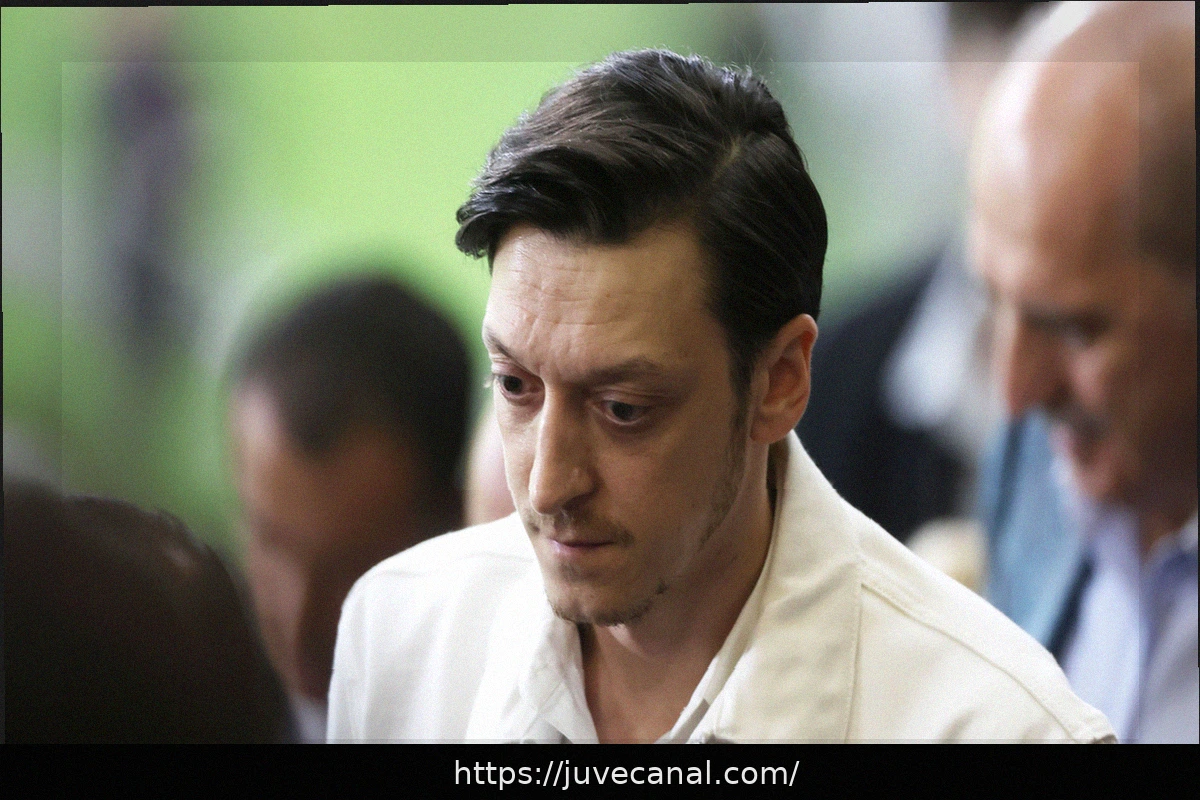
A new documentary examines the increasing distance between 2014 World Champion Mesut Özil and Germany.
Hamit Altintop, who played with Özil at Schalke 04 and Real Madrid and considers him a friend, states early in the three-part series: «Nobody truly knows him,» referring to the person Mesut Özil. This sentiment isn’t fully dispelled by the two-and-a-half-hour film, as Özil himself «was not willing» to participate.
Nonetheless, the documentary is insightful. Its value lies less in meticulously detailing a football star’s career and more in its narrative about integration and racism within Germany. While Özil has withdrawn from German public life for years, the filmmakers note that his story «still profoundly stirs German emotions.» It «reveals at least as much about German society and its approach to people with a migration background» as it does about Özil himself.
His story begins in Gelsenkirchen, a city Özil called «my home» in a 2017 interview shown for the first time on TV. He cited his love for the city as the reason for choosing to play for the German national team, rather than Turkey, the land of his grandparents—a decision his father, Mustafa, says parts of the family viewed as «betrayal.» The narrative culminates in Özil’s break with the national team, with Germany, and his closer alignment with Recep Tayyip Erdogan.
The Özil Enigma: «Nobody Knows Him»
A pivotal moment was the photograph. The controversial image of Özil with the Turkish President from May 2018 is first genuinely addressed after nearly 110 minutes of the film. The documentary illustrates that this photo emerged during a period when the national mood was shifting: from the initial euphoria of integration, which once earned Özil an award, and the welcoming culture of 2015, towards a rise in anti-immigrant sentiment and nationalist political parties. Özil felt he was still perceived as a «German-Turk» rather than a fully accepted German citizen.
He did not understand why the photo was deemed problematic. His then-advisor, Erkut Sögüt, explains, «For Mesut, it was clear from the beginning: we did nothing wrong.» Özil had met Erdogan «almost every year» prior, without issue. Yet suddenly, Özil transformed from an integration symbol into a perceived friend of a controversial leader, becoming a racially targeted scapegoat after Germany’s historic early exit from the World Cup.
The then-President of the German Football Association (DFB) stated that anyone posing with Erdogan «cannot have a place in the German national team.» Özil’s former school in Gelsenkirchen, to which he had been a socially engaged patron, rescinded his invitation. «That,» according to his advisor Sögüt, «hurt him the most.» Deeply wounded, Özil—whom former national coach Joachim Löw described as «one of the best national players Germany ever had»—resigned from the national team, expressing his disillusionment with the association and Germany.
Özil’s Transformation Perplexes Former Teammates
His career subsequently faltered. He moved to Turkey, intensified his relationship with Erdogan, who became his best man, campaigned for Erdogan’s party, and even got a tattoo of the Grey Wolves logo—a transformation his former teammate Per Mertesacker «cannot explain.»
And today? Löw reports that «Mesut now lives in Turkey, is less in Germany or extremely rarely,» and also missed a recent gathering of the 2014 World Cup winners, which Löw «found a shame.» Oliver Bierhoff believes Özil «wants to draw a clear line and burn bridges with Germany.»
Why? Returning to Hamit Altintop: «Mesut,» he says, «is simply hurt.» Because the country to which he dedicated his extraordinary talent and helped win the World Cup «did not provide him with the security and belonging» he yearned for.