

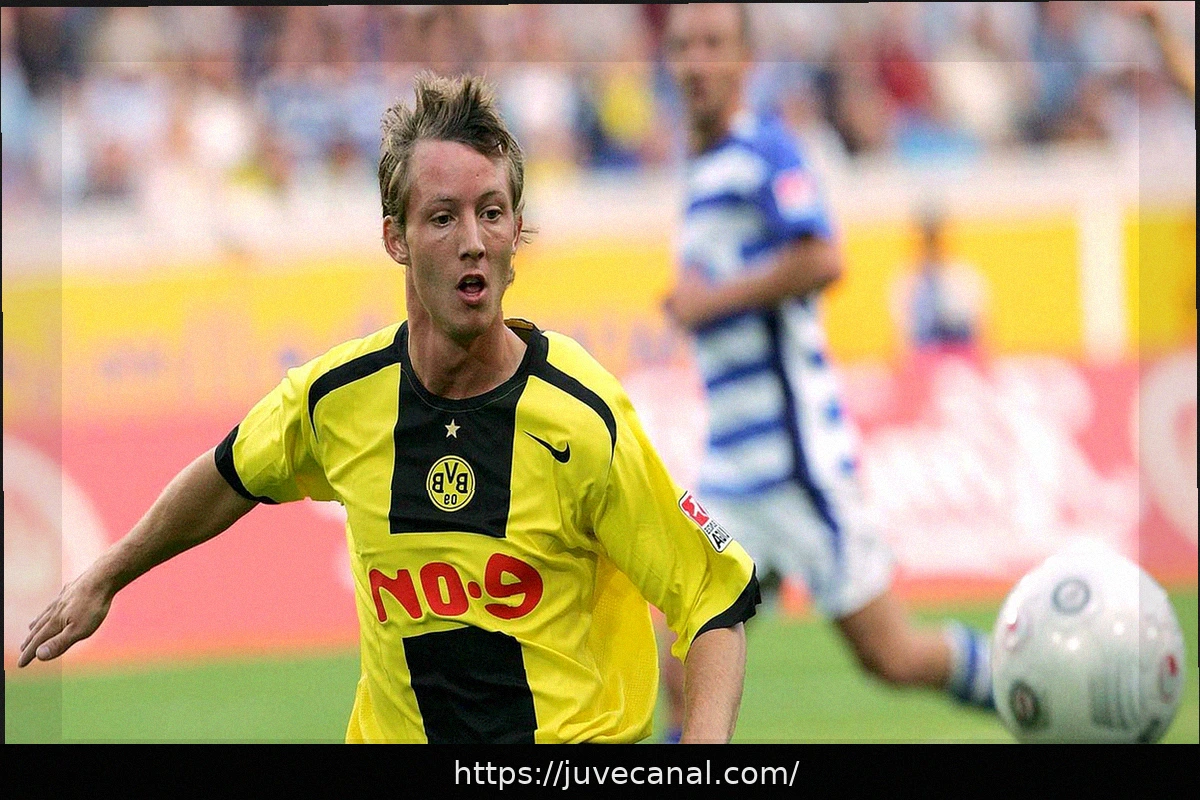
Cedric van der Gun, a name etched in the memory of Borussia Dortmund fans from the 2005/2006 season, despite featuring in merely three competitive matches. His tenure at the club coincided with a profoundly challenging era for BVB, a time when the club had just narrowly escaped financial ruin and was struggling to find its footing on the pitch.
Following a surprisingly strong second half in the 2004/2005 campaign, Borussia Dortmund underwent a significant squad overhaul. Numerous key players departed, yet severe financial constraints meant only a paltry 425,000 Euros could be invested in new talent, primarily for winger Delron Buckley. This left the squad perilously thin. Compounding the economic woes, an early and humiliating exit from the UI-Cup further dashed any rekindled optimism. CEO Hans-Joachim Watzke was candid about the club’s predicament, emphasizing that strict austerity was the «only alternative, as no one would give us even a single Euro more.»
In this climate, BVB’s strategy was to acquire cost-effective players who could still provide value. This led to Cedric van der Gun’s arrival. Coach Bert van Marwijk, who knew the 26-year-old winger from his Ajax Amsterdam days, invited him for a trial in late July 2005. Van der Gun, a product of the renowned Ajax academy, had shown flashes of brilliance earlier in his career but hadn’t quite achieved a major breakthrough, playing for various Dutch clubs before his contract with ADO Den Haag expired.
Van der Gun’s Three-Week Trial at BVB
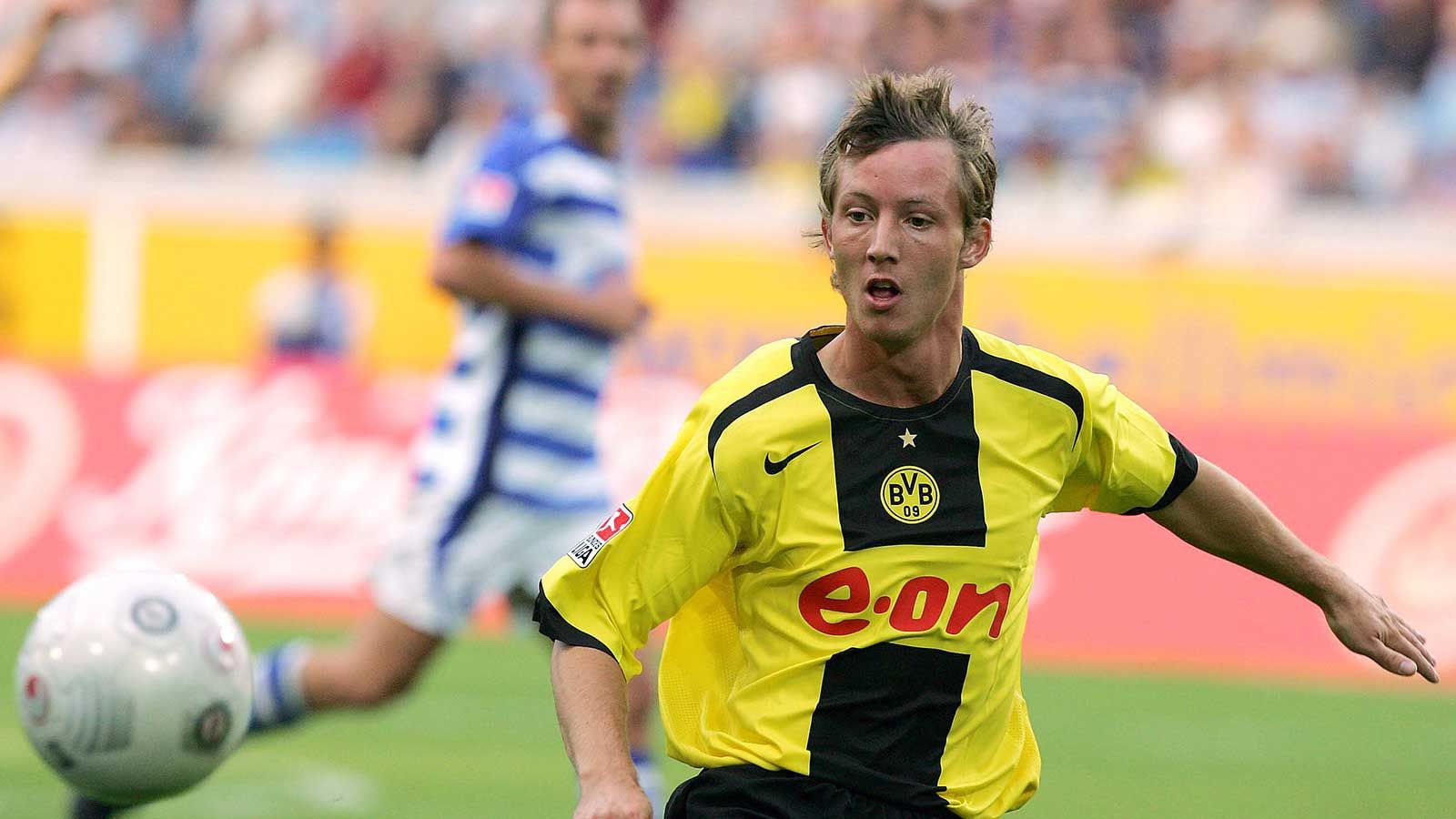
During his three-week trial, van der Gun exuded confidence, believing he could earn a contract. As a versatile attacker capable of playing on both flanks, he offered a much-needed boost to Dortmund’s offensive options, especially given striker Jan Koller’s fluctuating form and the coach’s preference for competition in his 4-3-3 system. Sporting director Michael Zorc observed his steady improvement, noting van der Gun was «fitter and his play better» after he scored twice in a friendly match. Soon after, van der Gun signed a one-year, performance-based contract, which Zorc confirmed would «minimally burden us financially.»
Donning the number 16 jersey, van der Gun accepted an annual base salary of €100,000, with the potential to double it through bonuses. He later recalled, «I could have earned significantly more at Dutch clubs, but the money didn’t matter to me. When Dortmund showed interest, I absolutely wanted to move there.» Van Marwijk harbored hopes: «If he has the level he had at Ajax Amsterdam, then he is a very good reinforcement.» Though his peak Ajax years were four years behind him, the financial risk for BVB was negligible. However, his arrival intensified competition for young talents like Salvatore Gambino and David Odonkor.
Tragedy Strikes: ACL Tear in Second Game
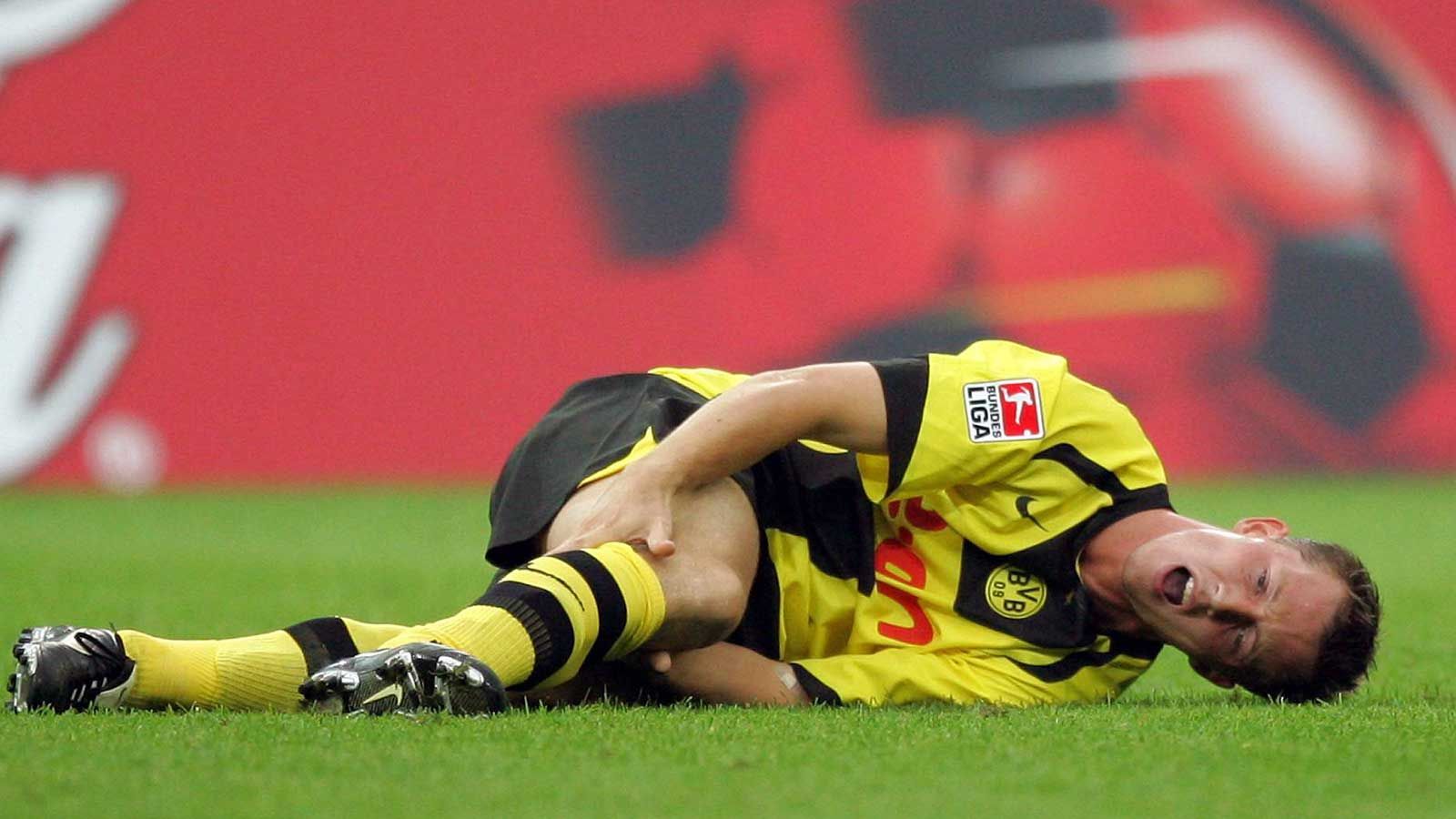
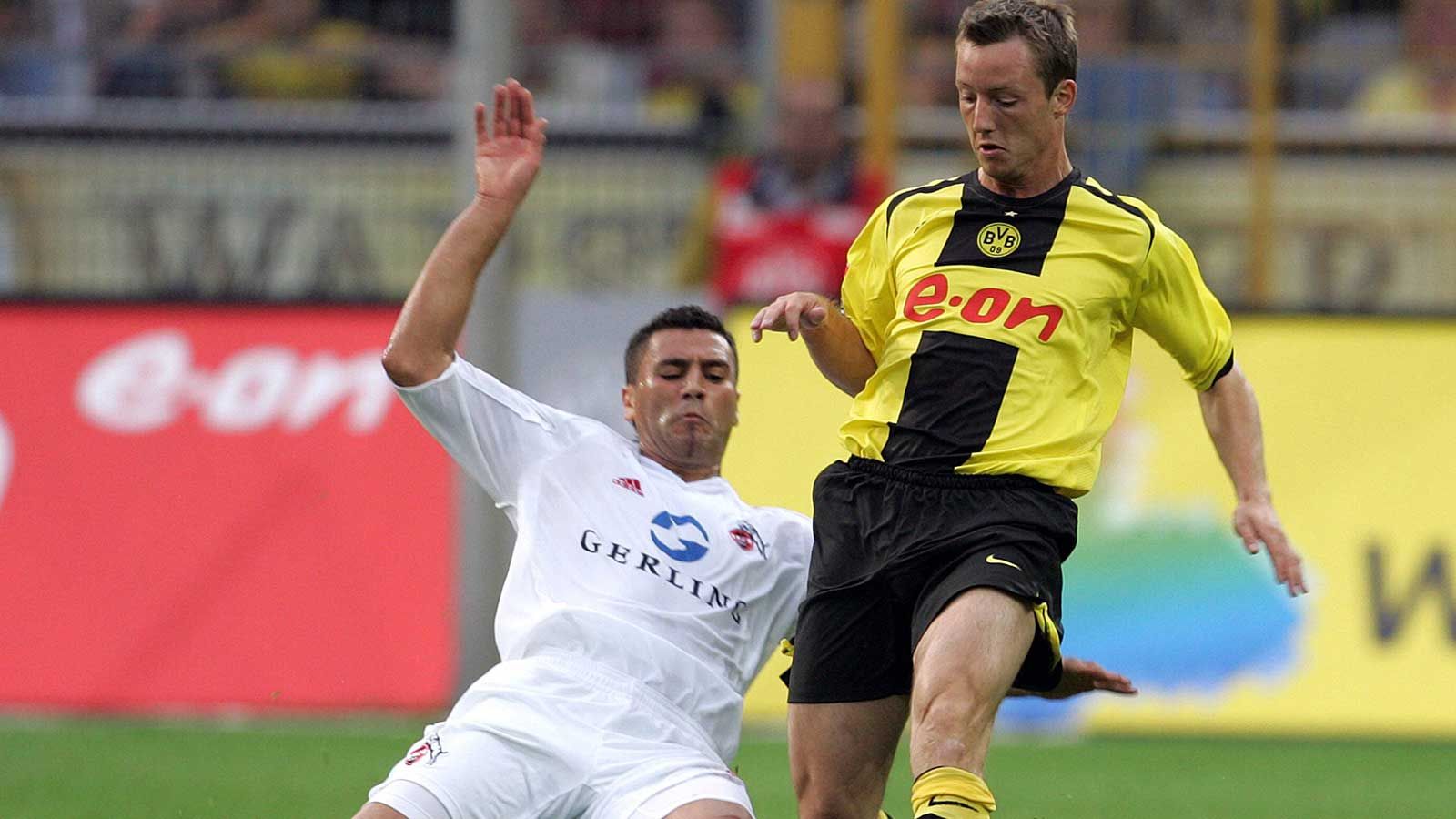
Van der Gun’s arrival was swiftly followed by another blow for the club: a humiliating first-round DFB-Pokal exit to second-division side Braunschweig. Van der Gun made his official debut for the BVB reserves and then his Bundesliga debut on Matchday 3, playing 60 seconds against Duisburg. Yet, fate dealt a cruel hand in his very next game, a home fixture against Köln on Matchday 4. After coming on as a substitute for an injured Delron Buckley in the 40th minute, disaster struck just four minutes after the half-time break: van der Gun twisted his right knee. The devastating diagnosis: a torn anterior cruciate ligament (ACL).
«I jumped a bit to play a ball back to a teammate. When I landed, I twisted my knee and immediately knew something serious had happened. Everything went very unluckily for me,» van der Gun reflected, looking back at the moment that derailed his season. This injury was particularly disheartening as it followed a pattern of similar ACL tears for BVB that season, affecting young talent Sebastian Tyrala, and later, key players Jan Koller and Lars Ricken.
BVB’s Desperate Search for Reinforcements
With a growing list of offensive players sidelined, including Buckley and Gambino, van Marwijk’s options were critically limited. While David Odonkor saw increased playing time, the void in attack was immense. Sporting director Michael Zorc attempted to bring Alexander Frei from Rennes to Dortmund during the winter break but ultimately had to wait until the summer. However, another potential transfer target inflamed fan sentiment and sparked weeks of heated debate.
The possibility of signing Ailton, a former Schalke 04 player who had recently moved to Besiktas after a single season with the arch-rivals, was floated. Zorc defended the idea, arguing, «In our situation, it must be legitimate to consider him.» This notion was met with furious backlash from BVB fans, who expressed their outrage with angry banners. Despite some BVB professionals, including Christoph Metzelder and Christian Wörns, publicly advocating for the Brazilian, Ailton ultimately joined HSV. Borussia Dortmund instead signed Matthew Amoah, another player familiar to van Marwijk, who remarkably failed to score a single goal for the club during his tenure.
BVB Coach Van Marwijk Wanted to Keep Him
Amidst these club-wide controversies, van der Gun focused on his arduous recovery. He underwent surgery in Amsterdam and completed the initial phase of his rehabilitation there, leveraging the familiarity of his home country and a trusted physiotherapist. He then commuted between the Netherlands and Dortmund, finally resuming running training in mid-January 2006, just four months post-injury.
It took another 100 days for him to make his full comeback, once again with the BVB amateurs, where he steadily increased his workload and even scored his first goal against Lotte. He also netted twice in a 9-0 friendly victory against a local selection. His poignant return to the first team occurred on the final matchday of the season, May 13th, against Bayern Munich. Entering the game in the 60th minute with BVB trailing 3-1, he made an immediate impact. Four minutes later, he assisted Philipp Degen’s goal to make it 3-2, and a recovering Jan Koller then dramatically leveled the score at 3-3 against the already crowned champions. «We even had a great chance to win the game 4-3 in the end,» van der Gun recalls, still expressing frustration over the missed opportunity.
Just days later, he scored his final goal for the Black and Yellows in a 1-4 friendly defeat against Polish club Korona Kielce. Despite his efforts, his time at BVB was destined to end. «Van Marwijk was very honest with me after the season. He said that whenever I could train and play, I was good. I felt that too. He therefore wanted to keep me,» van der Gun explained.
Van der Gun: «I Really Enjoyed My Time at BVB»
However, van der Gun’s dilemma lay in the club’s precarious financial state and the impending arrivals of new signings Alexander Frei and Nelson Valdez. «Players still had to leave before they could offer me a new contract. I was told to be patient,» van der Gun remembered. He waited for a while, but no one was sold. Then, a very attractive offer from FC Utrecht materialized, prompting his departure. «Ironically, shortly after, within a month, Odonkor and Buckley left the club…»
Injuries continued to shadow van der Gun’s career, even after his move to FC Utrecht and later helping Swansea City gain promotion to the Premier League in 2011, before retiring three years later. Despite his year in Dortmund being fraught with bad luck, van der Gun doesn’t view it as the bitterest period of his career. The now 46-year-old reflects on his time at Borussia Dortmund with surprising fondness: «I can still remember a lot very precisely. Despite the injury, I very much enjoyed my time there.»
Cedric van der Gun: Career Statistics Summary
| Club/Team | Matches | Goals | Assists |
| FC Utrecht | 115 | 28 | 10 |
| ADO Den Haag | 59 | 12 | 8 |
| Swansea | 42 | 7 | 1 |
| Ajax | 38 | 13 | 9 |
| Willem II | 30 | 6 | 1 |
| FC Den Bosch | 10 | — | 1 |
| BVB II (Amateurs) | 7 | 2 | 2 |
| BVB (First Team) | 3 | — | 1 |