

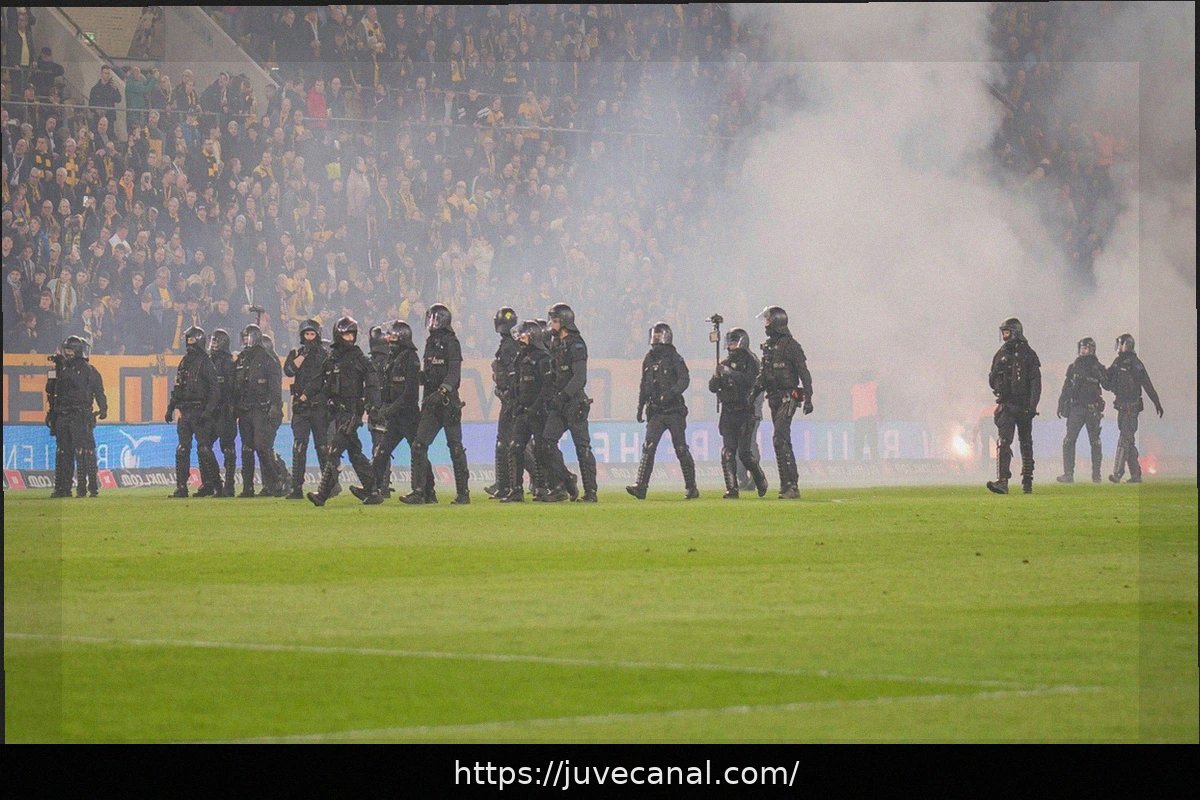
Chaos on the pitch, pyrotechnic incidents, and a late-game collapse marked an Easter weekend Dynamo Dresden would rather forget.
While the thick smoke from pyrotechnics cleared, investigations were launched, and a complex police operation concluded, silence eventually fell over the Rudolf-Harbig-Stadion. Yet, the repercussions of the scandalous 2. Bundesliga match between Dynamo Dresden and Hertha BSC (0:1) are expected to resonate for a considerable period. The full impact on German football remained unclear in the immediate aftermath of Saturday evening’s intense disturbances.
Scenes of mayhem within the stadium, pyrotechnics launched at rival supporters, and hundreds of police officers deployed on the pitch created terrifying images during prime viewing hours over the Easter weekend. This incident is set to reignite and intensify discussions surrounding stadium security.
Dynamo’s managing director, Stephan Zimmermann, expressed deep concern, stating, «The scenes we witnessed tonight are unacceptable and cause immense damage not only to our club but to German football as a whole. For months, we and many other clubs have championed fan interests and a safe stadium experience, making these events a severe setback.»
«Grist for the Critics’ Mill»
Hertha officials shared similar frustrations. «This undoubtedly plays into the hands of major critics, and we recognize that,» stated Managing Director Peter Görlich. «We advocate for a vibrant fan culture. However, when violence enters the equation, and individuals resort to firing pyrotechnics at others, that’s where I draw the line.»
Görlich cautioned against «generalizing everything and directly linking this incident to broader discussions about stadium ban policies.» He added, «However, one must seriously question the validity of continuing these discussions. We are slowly running out of arguments.»
This challenge is particularly acute in discussions with politicians, who have recently intensified pressure on football clubs. For instance, the interior ministers of North Rhine-Westphalia and Saxony, Herbert Reul and Armin Schuster (both CDU), no longer rule out the possibility that clubs may soon be liable for police costs incurred during high-risk matches. This could lead to millions in expenses for clubs, especially after the Federal Constitutional Court (BVG) ruled that states are permitted to charge such fees.
Against this backdrop, Dynamo’s financial director Zimmermann described the scenes from Dresden as «a complete disaster» and «utterly misguided.»
Flag Theft Allegedly Triggered Dresden Incident
The situation escalated dramatically in the 19th minute, following repeated pyrotechnic displays in both fan sections. Police reported that visiting fans breached a barrier and entered the inner stadium area. This sparked confrontations with approximately 60 home fans who had also bypassed barriers. Clashes ensued, with pyrotechnics and flares exchanged between groups.
Emergency personnel entered the field to separate the groups, leading to a 20-minute suspension of the match. Dresden’s Sporting Director, Sören Gonther, indicated that the catalyst for the unrest was «likely the theft of a flag.»
Dresden police have initiated over a dozen criminal investigations, including charges of disturbing the public peace, dangerous bodily harm, property damage, insult, and ticket fraud.
The actual football match became secondary. Approximately 600 visiting fans, who had departed the stadium early following the disturbances, missed Hertha’s continued push for promotion, securing a late goal from Marten Winkler (80th minute) despite being a man down. Meanwhile, Dynamo now faces increased worries about retaining their league status and can anticipate a substantial fine for the disturbances.